ID
ID  EN
EN 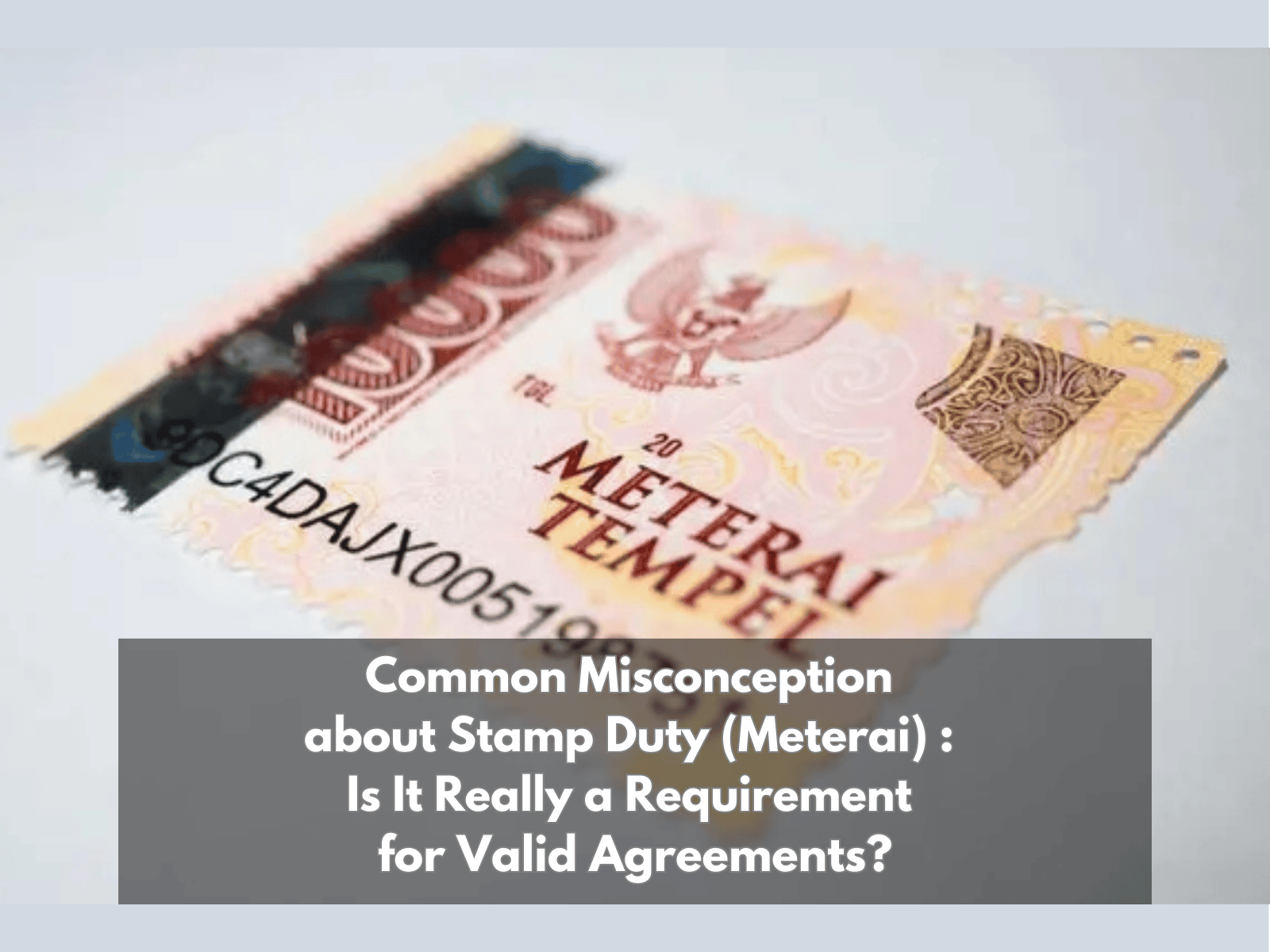
Many people still mistakenly believe that a stamp duty is a primary requirement for an agreement to be considered valid. However, in Indonesian civil law, the validity of an agreement does not depend on the presence of a stamp duty (meterai). This article will clarify this misconception and explain the actual function of stamp duty in legal documents.
Does Stamp Duty Determine Agreement Validity?
According to Article 1320 of the Indonesian Civil Code (KUH Perdata), the requirements for a valid agreement are:
- Agreement between parties
- Capacity to enter into an agreement
- A specific subject matter
- Legal cause
There is no provision in the Civil Code stating that agreements must have stamp duty to be valid. This means that even if an agreement doesn’t have a stamp duty, as long as it meets the four requirements above, the agreement remains legally valid and binding.
The Actual Function of Stamp Duty
So, if it’s not a requirement for validity, what is the actual function of stamp duty? In the Indonesian legal system, stamp duty serves as a tax on certain documents and acts as evidence in court. Here are some of its functions:
- As Court Evidence – Documents with stamp duty carry more weight in the evidentiary process.
- Preventing Tax Disputes – Stamp duty shows that document tax has been paid, avoiding administrative issues.
- Administrative Requirements in Some Institutions – Some institutions require stamped documents, although it’s not legally mandatory.
Types of Stamp Duty in Indonesia
Currently, there are two types of stamp duty in use:
- Physical Stamp Duty: Physical stamps like postage stamps, affixed to documents.
- e-Stamp: Digital stamps with unique codes issued by Peruri, used for electronic documents.
Documents Requiring Stamp Duty
Some documents that do require stamp duty based on tax regulations include:
- Receipts for transactions above certain amounts.
- Notarial deeds and documents requiring formal validation.
- Statements and powers of attorney involving financial transactions.
Conclusion
Stamp duty is not a requirement for agreement validity but rather a tax on certain documents that serves as evidence in court. So, if you make an agreement without stamp duty, don’t worry—as long as it meets legal requirements, the agreement remains valid! However, if the document might be used in legal disputes, adding stamp duty could be a wise preventive measure.
We hope this article helps clarify misconceptions about stamp duty! If you have any questions, feel free to discuss in the comments section.