
 EN
EN  ID
ID 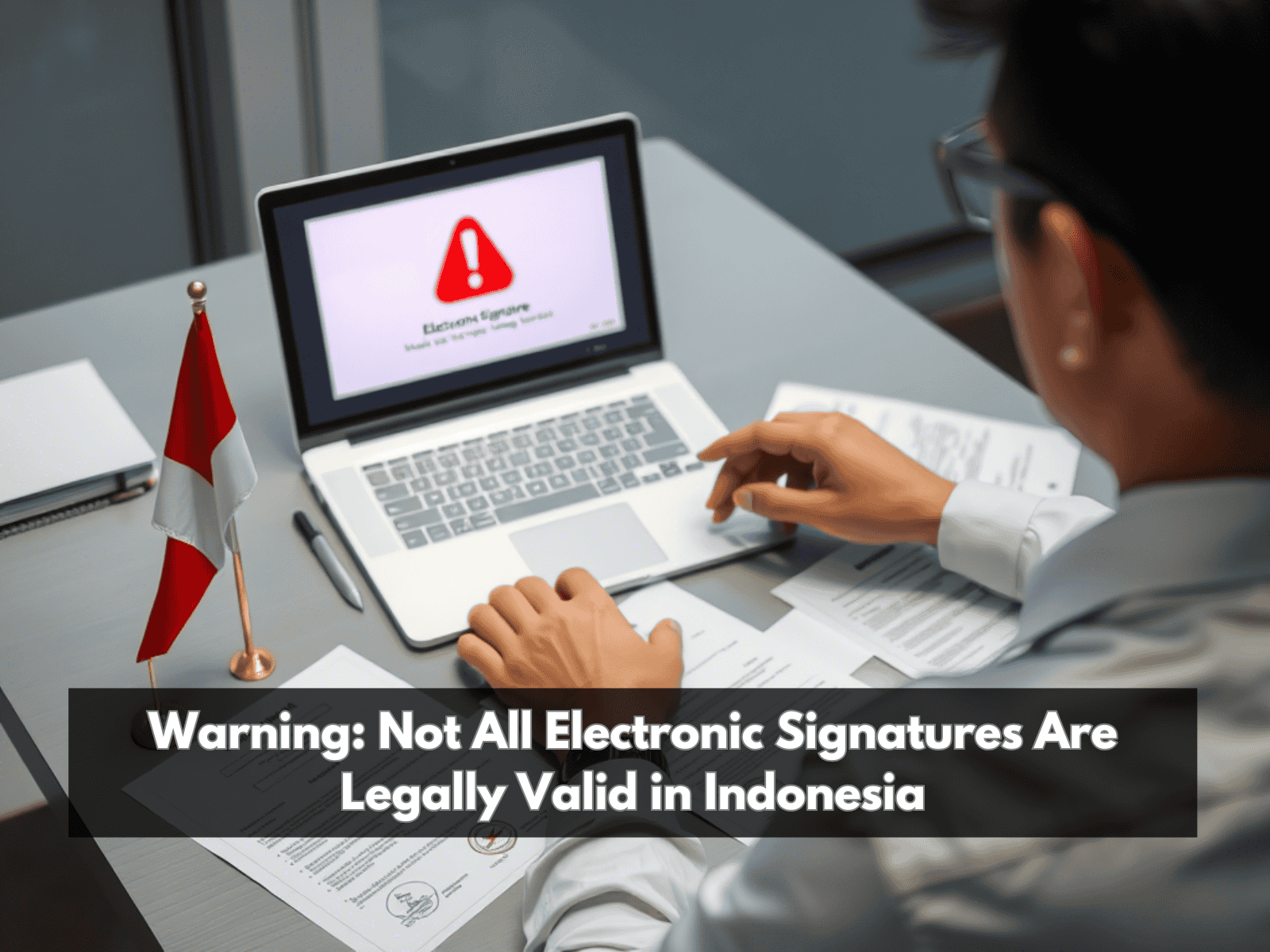
In the digital era, electronic signatures (e-signatures) are increasingly used for various transactions and agreements. From business contracts and banking documents to online loan applications, everything can now be signed digitally. But did you know that not all e-signatures have the same legal validity? If not used correctly, electronic signatures may be considered invalid and risk causing legal issues!
What Is an Electronic Signature?
An electronic signature is a digital form of signature used to validate electronic documents. In Indonesia, the validity of e-signatures is regulated by Law Number 11 of 2008 concerning Electronic Information and Transactions (ITE Law) and Government Regulation Number 71 of 2019 concerning Electronic Systems and Transactions.
E-signatures are divided into two types:
- Uncertified E-Signatures: E-signatures created without using government-recognized electronic certification service providers.
- Certified E-Signatures: E-signatures created using services from official electronic certification providers, such as the Electronic Certification Authority (BSrE) or recognized private providers.
Legal Validity of Electronic Signatures
Not all electronic signatures are legally valid. To be valid, electronic signatures must meet several requirements, such as:
✅ Can prove the signer’s identity
✅ Has verifiable authentication
✅ Cannot be altered after signing
✅ Uses recognized electronic certification service providers
Certified e-signatures have stronger legal standing because they are equipped with encryption technology and verifiable digital certificates. Conversely, uncertified e-signatures may be considered invalid in legal proceedings if their validity is questioned.
Legal Consequences of Using Invalid Electronic Signatures
If an electronic signature is not legally valid, the signed document can be voidable in legal proceedings, although not void by law. This means the document is still considered valid until a party files for cancellation in court and it is declared invalid. Here are some potential risks:
❌ Agreements Can Be Cancelled: If an agreement or contract uses an invalid e-signature, the aggrieved party can file a lawsuit to cancel it.
❌ Potential Legal Disputes: The validity of documents can be contested in court, potentially causing time and financial losses for the parties involved.
❌ Risk of Forgery & Misuse: Without strong verification, electronic signatures are vulnerable to forgery or misuse by irresponsible parties.
How to Use E-Signatures Safely?
To avoid legal issues, here are some safety tips for using electronic signatures:
🔹 Use Certified E-Signatures from government-recognized electronic certification providers.
🔹 Ensure Identity Verification before signing important documents.
🔹 Keep Digital Evidence as an audit trail in case of disputes.
🔹 Avoid Signing Suspicious Documents without further verification.
Conclusion
Electronic signatures are indeed practical, but their use must be done carefully. Make sure you use valid and certified e-signatures so that documents maintain their legal force. Don’t let your important documents become voidable just because you used electronic signatures that don’t meet the requirements!
What’s your experience with using electronic signatures? Have you ever encountered legal issues related to e-signatures? Share your thoughts in the comments!

