
 EN
EN  ID
ID 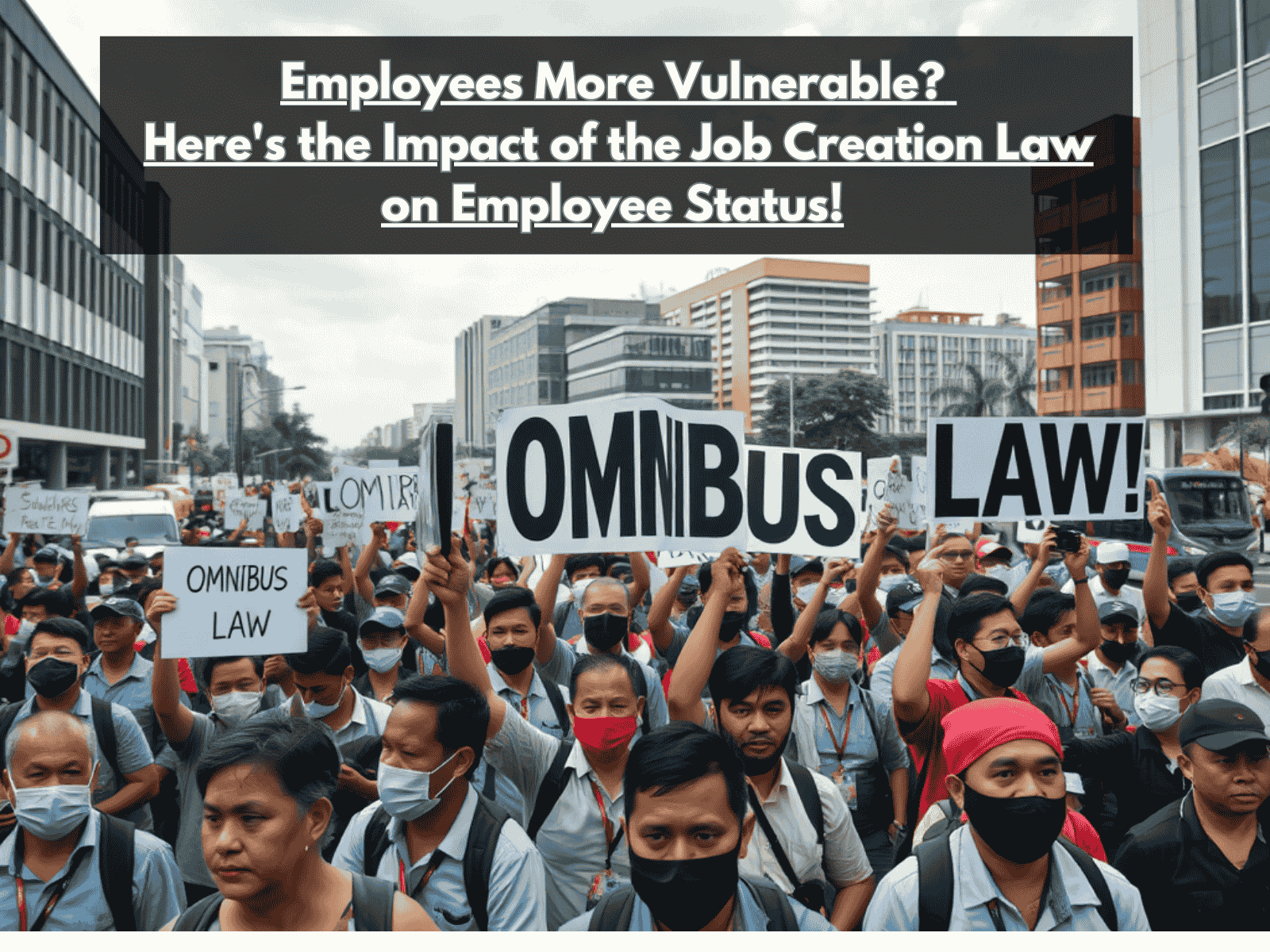
The Job Creation Law or Omnibus Law (Law No. 11 of 2020) has been a hot topic since its ratification on November 2, 2020, and became effective after its revision was passed through Law No. 6 of 2023 on March 31, 2023. One of the most controversial aspects is its impact on employee status. Many are wondering whether this regulation truly protects workers, or actually makes employees’ positions more vulnerable? If you’re a worker or job seeker, you must read this article to the end!
1. Employee Status Becomes More Flexible, But…
One of the major changes in the Job Creation Law is the flexibility of employment relationships. Now, companies can more easily recruit employees with a contract system (PKWT) compared to before. However, there are several consequences to consider:
- PKWT Without Maximum Limits: Previously, work contracts could only be extended for a certain period. Now, based on Article 59 of Law No. 13 of 2003 as revised in the Job Creation Law, there is no maximum limit so companies can continue to extend contracts without having to promote workers to permanent employees.
- Severance Pay Reduced: In case of layoffs, the severance pay received by workers is less than under previous regulations, according to Article 156 of the Job Creation Law, which certainly disadvantages employees.
2. Outsourcing Becomes More Liberal
Previously, outsourcing was only limited to certain jobs. With the Job Creation Law, outsourcing can be applied to almost all types of work according to the revised Article 66 of Law No. 13 of 2003.
What are the impacts?
- Weaker Job Security: Outsourced employees are easier to terminate without job security guarantees.
- Reduced Employee Rights and Benefits: Outsourced employees often don’t receive the same facilities as permanent employees.
3. More Flexible Working Hours, But Potentially Detrimental?
The Job Creation Law provides more flexibility in working hours arrangement, such as:
- Working Hours Adjustment: Some industrial sectors are allowed to have longer working hours with more flexible compensation, as regulated in Article 77 of the Job Creation Law.
- Extended Overtime: Overtime regulations are more relaxed, so workers can be asked to work longer than before according to Article 78 of the Job Creation Law.
However, these changes also risk increasing labor exploitation if not properly supervised.
4. Leave Rights and Termination Easier to Modify
Several provisions related to leave and employment termination have also changed, including:
- Long Leave No Longer Mandatory: Some types of leave that were previously mandatory can now be adjusted based on company policy according to Article 79 of the Job Creation Law.
- Easier Termination: Companies now have broader reasons for conducting layoffs, although there is still an obligation to provide compensation as regulated in Article 154A of the Job Creation Law.
5. Positive Aspects of the Job Creation Law
Behind its controversy, there are several benefits brought by the Job Creation Law:
- Increased Investment and Job Opportunities: With more flexible regulations, it is hoped that more investors will enter Indonesia, ultimately creating more job opportunities.
- Ease of Doing Business: Simplification of business licensing makes it easier for business actors to develop, which can impact job opportunity increases.
- Social Protection for Contract Workers: Although PKWT is more flexible, the government also provides Job Loss Insurance (JKP) programs for laid-off workers.
- Increased Productivity: With a more flexible work system, companies and workers can more easily adapt to industry developments.
6. What Should Workers Do?
With these changes, workers need to be more careful in understanding their rights and obligations. Here are some steps that can be taken:
- Understand Work Contracts Well: Don’t just sign! Make sure you understand the clauses in the employment agreement.
- Join Labor Unions: If possible, joining a labor union can provide more protection in dealing with these new regulations.
- Develop Skills and Seek Better Opportunities: With a more flexible work system, having additional skills can help you secure a safer position in the company.
Conclusion
The Job Creation Law indeed brings major changes to the employment world in Indonesia. Although aimed at increasing investment and creating jobs, some regulations actually make workers’ positions more vulnerable. However, by understanding these new rules and preparing well, workers can still take advantage of its positive aspects.
What do you think? Does the Job Creation Law bring benefits or harm workers? Share your opinion in the comments section!

